White Label Fitness App: What You Actually Get in 2026
A white label fitness app is a coaching app that carries your brand instead of the software vendor's: your name, your icon, your colors, sitting on your client's home screen like you built it yourself. In 2026 it is the fastest route to looking like a serious business without spending $35,000 to $180,000+ on custom development. This guide covers what a white label fitness app actually includes, how the cost math compares to building your own, and the seven checks to run before you put your brand on one.
What a white label fitness app actually includes
Strip away the marketing and a proper white label fitness app has four layers.
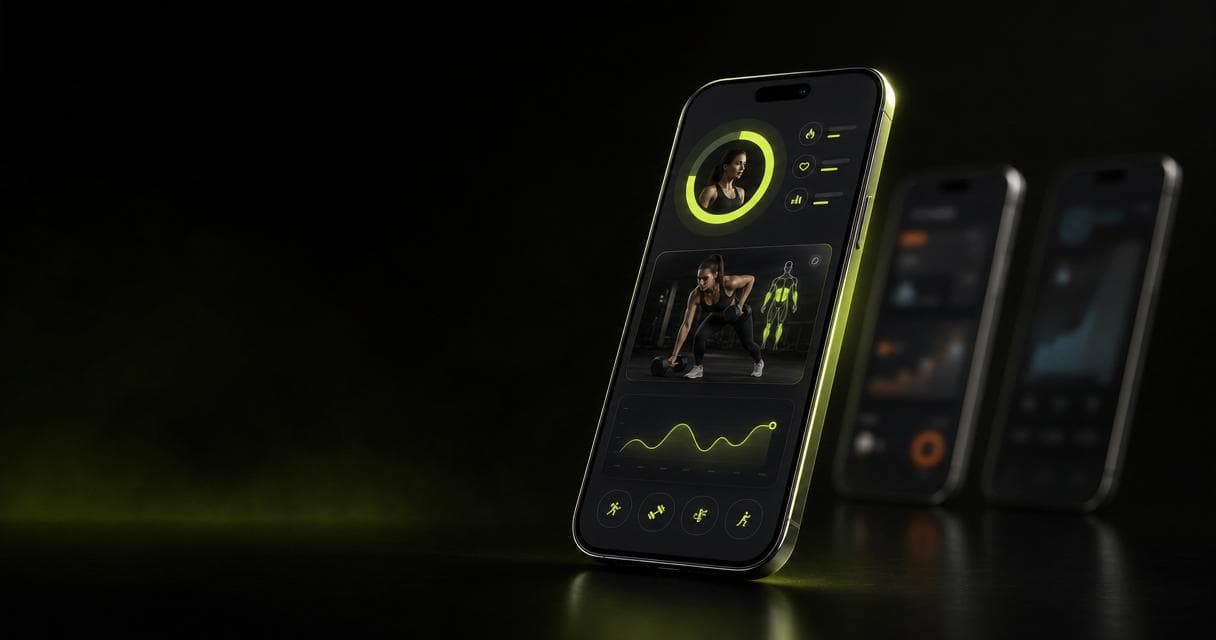
The client-facing app. Native iOS and Android apps published under your brand. Your clients search your business name in the App Store, not the platform's. This is the whole point, and it is where cheap "white label" offers cut corners: some platforms only reskin a shared app with your logo on a splash screen, and the store listing still belongs to them.
The coaching engine underneath. Workout builder, exercise library, nutrition and macro tools, habit tracking, check-ins, messaging. Branding without delivery tools is a business card, not a platform. If you want to see what a complete engine looks like in practice, the LVLUP feature set is a reasonable benchmark: programming, nutrition, check-ins, and payments in one place.
The business layer. Payments, packages, and client management. Watch the commission model closely here. Some platforms take a cut of every sale you process through your own branded app. You are paying for the software and then paying again on revenue that your reputation earned.
The launch process. Someone has to prepare store listings, submit builds to Apple and Google, and handle review. Good vendors run this for you against a fixed timeline. Vague answers about launch time usually mean months.
White label vs custom fitness app development: the cost math
Coaches ask about custom builds more than you would expect, usually after a bad experience renting space inside someone else's app. The numbers are sobering. Industry estimates for 2026 put a basic custom fitness app at $35,000 to $60,000, with feature-complete coaching apps running $100,000 to $180,000 or more before you pay a single month of maintenance. Timelines run 12 to 16 weeks for a lean build, longer once nutrition tools and wearable integrations enter the scope.
That spend might make sense for a funded startup chasing the consumer market, which is real: the fitness app market is projected to reach roughly $22 billion in 2026, growing at over 20% a year. But you are not a consumer app company. You are a coach with clients. Your app does not need to beat MyFitnessPal in the store rankings. It needs to deliver your programs, your check-ins, and your billing under your name.
That reframe is what makes white label the default answer for coaches. You get the branded storefront and the coaching engine for a monthly subscription, and the vendor absorbs the development, maintenance, and store compliance costs across their whole customer base.
White label fitness app vs shared coaching platform
The other comparison that matters is the one most coaches actually face: white label versus staying on a shared platform where every client sees the vendor's brand. We covered the strategic side in branded coaching app vs shared platform; here is the short version in one table.
| Factor | Shared platform app | White label fitness app |
|---|---|---|
| App Store listing | Vendor's brand | Your brand |
| Client perception | You rent software | You run a product |
| Pricing power | Anchored to the platform | Anchored to your brand |
| Client ownership | Diluted, platform sits in the middle | Direct, your app on their phone |
| Switching cost for you | Low, and the vendor knows it | Higher, so pick the right partner |
The pricing power row deserves a sentence. Coaches selling through a branded app consistently report easier high-ticket conversations, because the client is buying a program inside your product rather than a subscription inside someone else's. Perception is not everything, but in coaching it prices everything.
7 checks to run before you put your brand on an app
A white label decision is a partnership decision. Run these checks before signing anything.
- True store presence. Is the app published under your own developer listing and searchable by your business name, or is it a themed login inside the vendor's app? Ask for a live customer example and search the store yourself.
- Commission on your revenue. Does the platform take a percentage of your sales? LVLUP charges 0% commission on coach revenue, and that should be your baseline expectation, not a premium feature.
- Launch timeline in writing. Get a number. LVLUP ships branded apps in roughly 20 days. Anything without a committed timeline tends to drift for a quarter.
- Depth of the coaching engine. Count what your delivery actually needs: exercise library size (LVLUP ships 1,000+ movements), nutrition planning, check-in workflows, messaging. A beautiful shell with a thin engine will cost you clients by month two.
- Who owns the client data. If you leave, can you export your clients, their history, and their programs? Get the answer in writing.
- Update cadence. Your branded app still needs to keep pace with iOS and Android releases. Ask how often builds are refreshed and who handles store review issues.
- What existing users say about support. Not the sales team. Find coaches on the platform and ask how fast real problems get fixed. Comparison research helps here; our Trainerize alternatives breakdown shows how wide the gap between platforms can be, and the Trainerize comparison page walks through the white label question specifically.
How LVLUP approaches white label
Full disclosure, this is our product, so weigh accordingly. LVLUP was built around a simple position: the coach owns the brand, the margin, and the client relationship. In practice that means fully branded native iOS and Android apps published under your name, 0% commission on everything you sell, the complete coaching engine (programming with a 1,000+ exercise library, nutrition planning, check-ins, messaging, payments), and a launch process that typically has your app live in about 20 days.
Where is white label not the answer? If you are a brand-new coach with three clients and no proven offer, spend your energy on getting clients, not on an app. A shared platform or even a spreadsheet is fine at that stage. The branded app pays off once you have an audience or a client base that should be compounding under your name instead of a vendor's. We wrote about that transition in how coaches scale past the referral plateau.
Key takeaways
- A white label fitness app puts your brand, not the vendor's, on the App Store and on your client's phone.
- Custom development runs $35,000 to $180,000+ in 2026; white label delivers the same client-facing result on a subscription.
- Verify true store presence: some "white label" offers are just a logo on a shared app.
- Never accept commission on your own revenue; 0% should be the baseline.
- Demand a committed launch timeline in writing, and confirm who owns client data if you leave.
- Skip white label until you have a real client base; then stop building someone else's brand with it.
See your brand on a real app
LVLUP launches fully branded iOS and Android apps in about 20 days, with 0% commission. Explore the platform and see if it fits your coaching business.
FAQ
What is a white label fitness app?
A white label fitness app is coaching software published under your own brand: your name, icon, and colors on the App Store and Google Play. The vendor builds and maintains the technology while your clients experience it as your product.
How much does a white label fitness app cost compared to custom development?
Custom fitness app development in 2026 typically runs $35,000 for a basic build to $180,000+ for a full coaching feature set, plus ongoing maintenance. White label platforms deliver branded apps on a monthly subscription, usually for less than the cost of one week of custom development per year.
How long does it take to launch a white label fitness app?
It depends on the vendor's process and Apple's review queue. LVLUP typically takes around 20 days from signup to a live branded app. Treat any vendor that will not commit to a timeline as a schedule risk.
Is a white label fitness app worth it for a new personal trainer?
Usually not on day one. If you are still building your first client base, put your energy into coaching and acquisition. A branded app starts paying off once you have clients and an audience whose loyalty should be attached to your name rather than a platform's.
Do white label fitness apps take a commission on sales?
Some platforms do take a percentage of the revenue you process through your branded app, which quietly erodes your margin as you grow. LVLUP charges 0% commission. Whatever platform you choose, get the commission model in writing before you commit.