Branded Coaching App vs Shared Platform (2026)
Branded coaching app vs shared platform: what coaches actually own
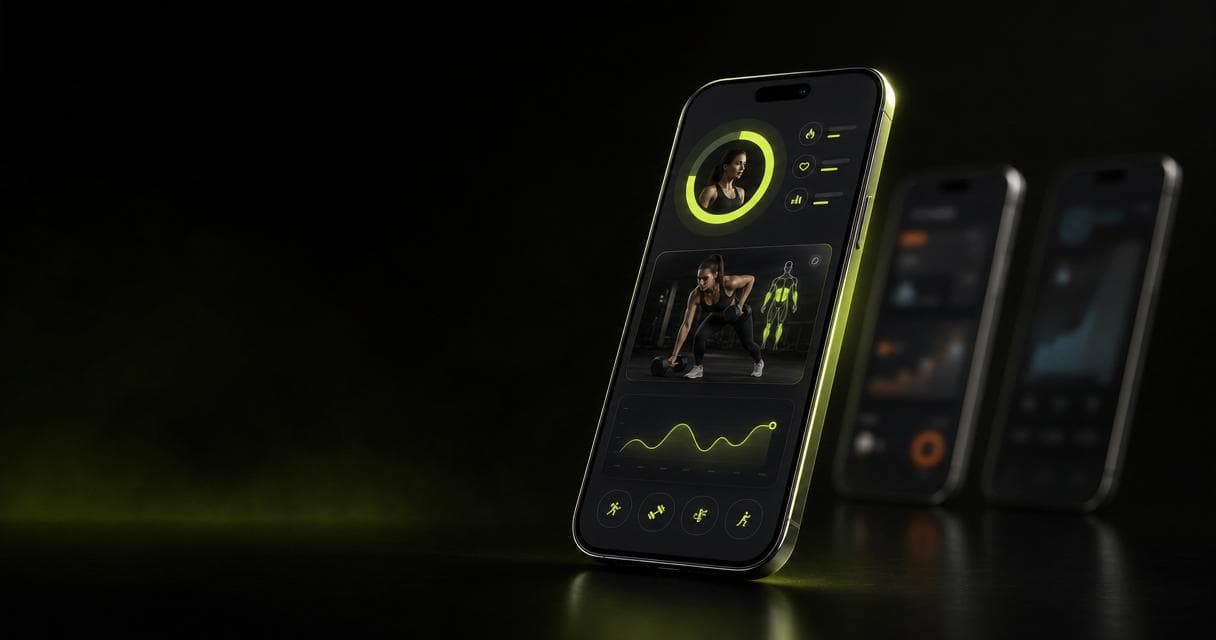
A branded coaching app is one your clients download under your name, your logo, and your colors. It is not a generic platform login they share with ten thousand other coaches. The practical difference isn't cosmetic. With a shared platform, you rent space on someone else's product and your client's loyalty quietly attaches to the platform. With a branded coaching app, the client opens your app every morning, and the business you're building has an asset with your name on the door.
Most advice you'll read online tells you a branded app is a luxury, a $200 to $500 a month add-on that only makes sense once you've crossed 100 clients. That framing is outdated, and it mostly comes from companies that sell the expensive version. The real question in 2026 isn't whether you can afford a branded app. It's whether you can afford to keep building your client relationships on a platform that puts its name on them instead of yours.
Key takeaways
- A branded coaching app puts your name on the product clients use daily. A shared platform puts theirs, and your clients' habit attaches to the platform, not you.
- The "branded apps are only for 100+ client agencies" line comes from vendors who price the branded tier as a premium upsell. It's a sales position, not a law of the market.
- Owning the app means owning the client relationship, the data, and 100% of the revenue you collect, with no marketplace cut sitting between you and the people who pay you.
- Retention is where ownership pays off. A 5% lift in retention can raise profits 25% to 95%, and a branded daily-use app is one of the few things that reliably moves that number.
- A branded app only helps if it ships fast and stays simple. A six-month custom build usually isn't worth it for a solo or small coaching business.
What "shared platform" actually costs you
A shared platform feels free because the cost isn't on the invoice. It's structural.
When your client trains inside a generic app, every habit loop they build, opening it, logging a workout, checking a macro target, reinforces a relationship with the platform. You're the voice inside it, but you're a tenant. If you ever move, you're asking forty people to not just follow you but to re-learn a new tool, re-download, re-onboard. That friction is the platform's retention strategy, and it works against you, not for you.
There's also a perception tax. A client paying $200 a month for high-touch coaching, then logging into an app that looks identical to the free-tier experience their neighbor uses, feels the gap. Premium positioning and a generic interface don't sit well together. Coaches who charge well tend to figure this out the hard way, usually after a client churns and says some version of "it just started to feel like an app."
None of this means shared platforms are scams. For a coach taking their first three clients, a shared tool is a completely reasonable place to start. The problem is treating "start there" as "stay there," and not noticing that every month you stay, you're depositing brand equity into an account with someone else's name on it.
Why "branded apps are only for big operations" is a sales position
Run a few searches for "white label coaching app" and you'll see the same claim repeated: a branded app is a high-cost play reserved for large operations with 100+ clients and an established brand. It shows up in roundups, builder-tool blogs, and, tellingly, on the blogs of platforms that sell a branded tier as their most expensive plan.
That's not a neutral observation. It's a pricing decision dressed up as market wisdom. If your business model is to upsell branding as a premium feature, "you don't need it yet" is exactly what you'd tell a coach with 30 clients, right up until you'd like them to upgrade.
The actual economics have shifted. The infrastructure to ship a branded native app (the app-store accounts, the build pipeline, the maintenance) used to be the expensive part, which is why it got reserved for agencies. That's the part that's been commoditized. When a platform builds that pipeline once and ships a branded app for every coach on it, the marginal cost of your branded app drops to roughly nothing. The "only for 100+ clients" math assumes a cost structure that modern platforms have already engineered away.
So the honest version of the advice is narrower than it sounds. A custom-built app, meaning three to five months of development for an MVP, is genuinely overkill for most coaches. A branded app delivered on shared infrastructure is not. Those are two very different products that the listicles tend to blur together.
The three things you actually own with a branded app
Strip away the marketing and ownership comes down to three concrete assets.
The client relationship. Your app is the daily touchpoint. When the brand on that touchpoint is yours, the relationship is portable and yours to keep. This is the same reason smart coaches build email lists instead of renting an audience on a single social platform. You don't want your business to live or die by someone else's product roadmap.
The data. Check-ins, adherence, progress photos, message history: the record of every client's journey is the raw material of good coaching. On a branded platform built for ownership, that history is yours to use for retention, for case studies, for understanding why clients stall at week three. You can read more on putting that data to work in our breakdown of a client check-in system that catches churn early.
The revenue. This is the one coaches feel most directly. A branded coaching app that processes payments under your business keeps the full price your client pays in your account, minus only the standard payment-processing fee everyone pays. No marketplace commission, no platform cut skimming a percentage of every renewal. Over a year and forty clients, the difference between 0% and even a modest commission is a meaningful slice of your income.
Where a branded app actually moves the numbers: retention
Ownership sounds abstract until you connect it to the one metric that runs a coaching business: retention.
Fitness apps lose users fast. Day-one retention for fitness-focused apps sits around 30% to 35%, with the best-performing apps reaching the mid-40s, according to industry retention benchmarks. And the financial upside on the other side is enormous. Bain & Company's research, popularized by Fred Reichheld, found that increasing retention by just 5% can lift profits by 25% to 95%. Retention isn't one lever among many. For a subscription coaching business, it's close to the whole game.
A branded app earns its keep here for a simple behavioral reason: the app a client identifies with you gets opened. When the icon on their home screen carries your brand and the experience feels built for them, the daily-use habit is stickier than a generic login they barely distinguish from the other fitness apps in their folder. The app isn't doing the coaching, you are, but it's the surface your coaching lives on, and a branded surface holds attention better than a rented one.
If retention is the lever you most want to pull this quarter, it's worth reading our deeper guide on how to retain coaching clients past the 90-day mark, which goes beyond the app into the check-in cadence and communication rhythm that actually keep people enrolled.
How to decide: branded app, shared platform, or custom build
Three options, three honest fits.
| Option | Brand on the app | Time to launch | Revenue cut | Best for |
|---|---|---|---|---|
| Shared platform | The platform's | Immediate | Varies; may include a marketplace cut | Your first 1 to 3 clients, testing the waters |
| Branded app (shared infrastructure) | Yours | Days to a few weeks | 0% commission; standard payment fees only | Coaches serious about owning a business |
| Custom-built app | Yours | 3 to 5 months for an MVP | None, but high build and maintenance cost | Large operations with a developer budget |
The decision is less about size than about intent. If you're testing whether you even like online coaching, start on a shared tool and don't overthink it. If you've decided this is a business you're building for years, the branded app on shared infrastructure is the obvious middle path. You get ownership without the cost and timeline of custom development. The custom build only makes sense when you have specific product requirements no platform meets and the budget to maintain software indefinitely.
For coaches weighing a move off a shared platform specifically, our Trainerize alternative comparison lays out the branded-app and commission differences attribute by attribute, and our round-up of the best Trainerize alternatives for 2026 covers the wider field.
See what a branded coaching app looks like
Get a fully-branded iOS and Android app for your coaching business, 0% commission, live in about 20 days. Explore LVLUP free at lvlup-app.com/discover.
The bottom line
A shared platform is a fine place to start and a poor place to stay. A branded coaching app turns the daily touchpoint with your clients into an asset you own: the relationship, the data, and the full revenue. The old objection that it's only for big operations is mostly a pricing story told by the companies that sell the expensive version. If you intend to coach for the long haul, build on something with your name on it. You can compare LVLUP's branded-app approach and pricing on the features and pricing pages.
FAQ
What is a branded coaching app?
A branded coaching app is a mobile app your clients download under your own business name, logo, and colors, rather than a generic platform's brand. Clients experience your coaching inside an app that looks and feels like it belongs to you, which reinforces your brand instead of the software vendor's.
Do I need a branded app if I only have a few clients?
Not necessarily on day one. A shared platform is a reasonable place to take your first handful of clients. But if you've decided coaching is a real business you're building, moving to a branded app early avoids depositing months of brand equity and client habit into a platform that isn't yours.
How is a branded app different from a custom-built app?
A branded app on shared infrastructure gives you your own branding on a platform that's already built and maintained, so it launches in days or weeks. A custom-built app is developed from scratch for you, which can take three to five months for an MVP and carries ongoing maintenance costs, so it's overkill for most solo and small coaching businesses.
Does a branded coaching app help with client retention?
It helps indirectly but meaningfully. The app doesn't replace your coaching, but a branded daily-use app that clients identify with you tends to hold the open-it-every-day habit better than a generic login. Retention is where the financial payoff sits, and a 5% retention lift can raise profits 25% to 95%.
What does "0% commission" actually mean for a coaching app?
It means the platform doesn't take a percentage of the money your clients pay you. You still pay the standard payment-processing fee that applies to any online transaction, but no marketplace or platform commission is skimmed off each renewal, so you keep the full price you charge.